What conferences can’t do for change makers
Our sector runs on conferences. They do something important, but they’re not good at the deeper stuff. The residential retreat is where the magic happens, and it’s chronically underfunded.
 Jack MilroyFounder, Fieldwork Advisory
Lately I’ve been thinking about how leaders in change making connect, grow and learn.
I’ve got about 20 years in the advocacy sector and progressive movement, both here in Australia and in North America. Over that time I’ve been to my share of conferences and events. Some were incredible, life changing even. Some were fine. Some were a waste of our atmosphere’s precious oxygen.
Our sector runs on conferences. They are usually held in big rooms, with packed schedules, and always lanyards (not sure why, it’s not like anyone has ever been pulled up for not wearing a lanyard to a session...). There will be hundreds of advocacy leaders milling around the same building for two or three days, absorbing keynotes, rotating through breakout sessions, and catching fleeting glimpses of each other in the hallways between sessions.
Before I go on, I want to be clear that I think these conferences are really valuable, not in spite of their scale but because of it. The people that organise them are heroes, because it is a slog.
Big gatherings like Netroots Nation in the United States, Progress here in Australia, or Broadbent’s Progress Summit in Canada do something important. They expose us to work happening outside our own organisational and sectoral silos, and I’ve come to believe that cross-vertical learning is one of the most underrated things in our sector. A traditional advocacy org learns from a grassroots organiser. An organiser gets grounding insights into how to frame their issue for the broader public. We can get so heads down in our own work that we forget this kind of exposure is even possible, and I really think these events serve a specific and important function in making it happen.
But big conferences are not particularly good at the deeper stuff, and here’s why.
They’re speed dating, in my experience (of conferences, not speed dating). You meet a lot of people, have a lot of interesting chats, get excited about three or four of them, and then the day ends and everyone scatters to different hotels and different dinner plans or different flights. The programming is packed tight because organisers need to show value to cover the ticket price they are forced to charge by astronomical venue hire rates. The venue is a convention centre in a capital city. There’s no shared space to just be with people and no real time to go deep with the ideas or the people you just found cool and interesting (or annoying and you want to argue with, if you’re me). Most people leave these events energised, but I reckon most of that energy dissipates within a fortnight, not because it failed but because there was nowhere for it to go.
What I really want to talk about is the residential retreat, because I think it’s where the magic happens. The issue is that this format is chronically underfunded and undervalued in our movements.
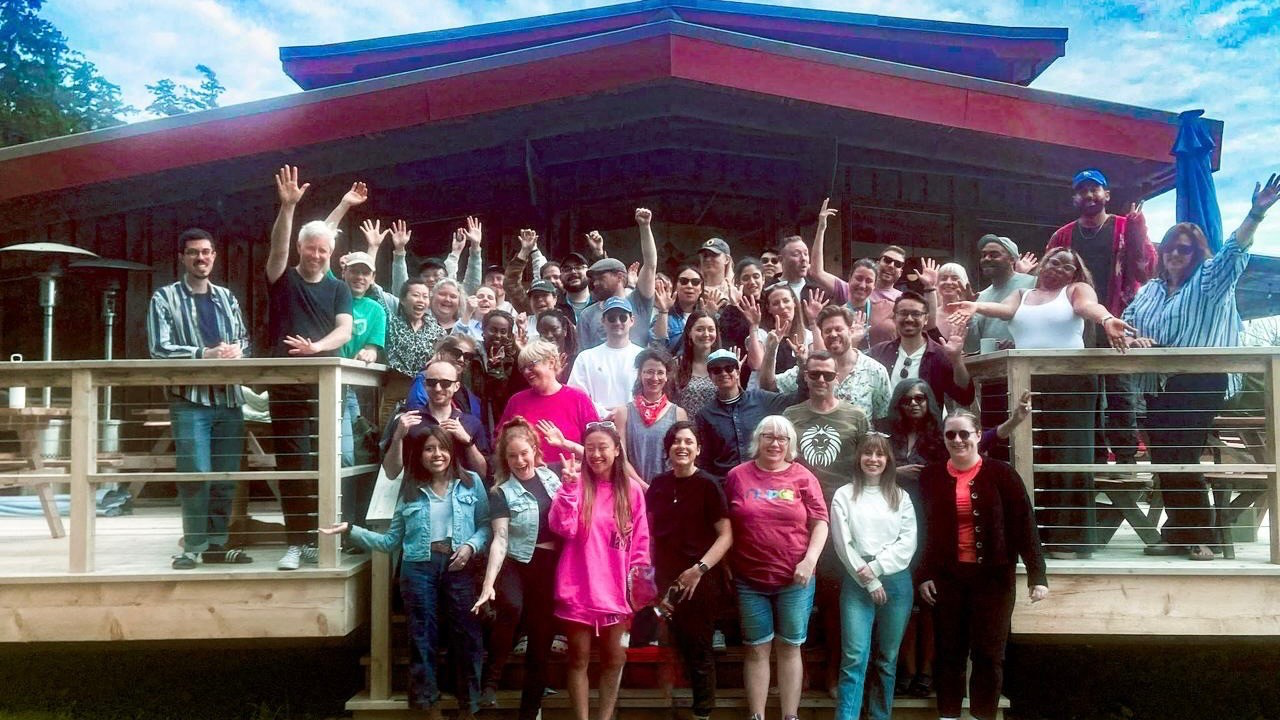
In 2018, along with Peter Wrinch and Khari McClelland, I founded Activate. I’d been to a bunch of big conferences, and I had a sense of the specific frustration progressives had about what they couldn’t do. We wanted to build something different: smaller, curated, residential, held somewhere iconically beautiful (Hollyhock on Cortes Island, British Columbia) and removed from the rhythms and demands of everyday work and the grind of life. Back then there wasn’t even reliable wifi on the island, let alone cellular data. It was perfect.
In this kind of gathering, where you have breakfast with the same people you argued tactics with the night before, you have enough time and space to actually have deep conversations, and the land and environment itself does much of the work. There were earlier iterations with a similar format, like Web of Change, that many North American progressive leaders point to as formative experiences. I’ve come to think there’s a reason people talk about those gatherings the way they do, years and sometimes decades later.
Activate at its best was summer camp for grown-ups who wanted to change the world. It was connective, human, occasionally vulnerable, held in a place that reminded participants there was a world outside their inbox, and that they were more than just a number of endless internal problems. The learning that happened there wasn’t by definition better content than you’d find at a big conference, though I’d like to think it often was, but it happened in conditions that allowed it to sink in. Shared meals, close proximity, time, and the particular quality of attention that comes from being free from everything else.
People came for the content and the sessions. But they left with a community.
Because community is what sustains us in the work we do, especially as the substance of our work changes rapidly around us with shifts in technology and the upheaval of AI on our workflows.
So, I really think the sector has the balance wrong. We fund and attend the big gatherings and treat retreats as a luxury, when my experience suggests it’s closer to the other way around. Both matter, but for very different reasons.
So here are three calls to action for leaders across our sector.
Funders: Build residential convenings and relationship-building into your funding models explicitly. If your grantees can’t resource the deeper work of building and sustaining community and connection, that’s a gap in your strategy, not theirs.
Leaders: Before you book another big conference for you and your team, ask what you actually did with the last one. Who did you follow up with? What changed? If the answer is vague, conferences might be filling a slot that a retreat would serve better.
Everyone: Find your retreat. Whatever exists in your context, go look for it. And if nothing does, consider whether you’re the person to build it. Or shoot me a DM and I can help! The sector needs more of these.
Two decades convening and advising progressive leaders across Australia, Canada and the US. If this piece describes your campaign, a Campaign Review is the fastest way to test it.
Book a Campaign Review →